

Why global events still affect the cost of powering UK organisations
If recent global headlines feel distant from the day-to-day running of your organisation, that is understandable.
But when it comes to energy, global events have a habit of showing up in places we notice very quickly.
Whether you run a business, manage a school estate, oversee a charity building or operate within the public sector, the cost of energy remains one of the most volatile operational expenses many organisations face.
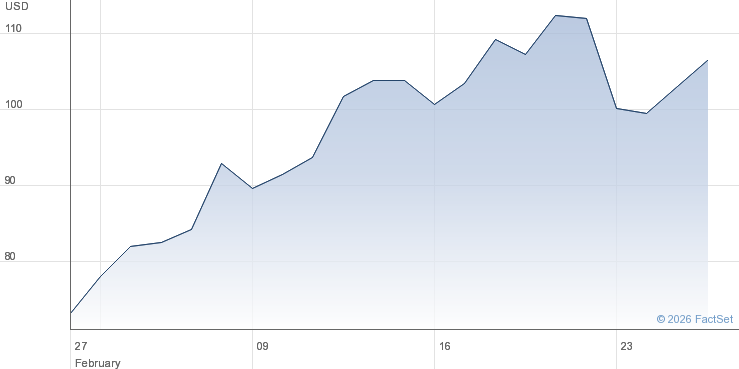
Recent tensions involving Iran have already pushed global oil prices higher.
For many people, the first place this becomes visible is at the petrol pump.
But history suggests that when global energy markets shift, the effects rarely stop there.
The question many organisations are now asking is simple.
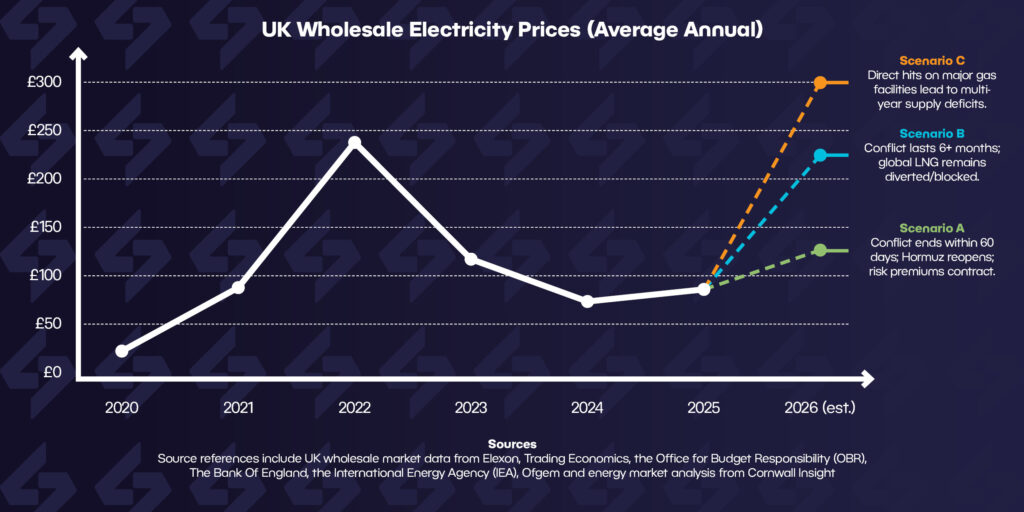
Could energy costs start rising again?
You may already be seeing it in fuel costs
If your organisation operates vehicles or relies on transport, you may already have noticed fuel prices increasing at UK forecourts.
Petrol and diesel prices tend to react quickly to global oil markets, which is why they are often the first visible sign of changes in energy prices.
Electricity and gas markets usually respond more slowly.
But they are often influenced by many of the same global forces.
For many organisations, rising fuel costs can be the first signal that wider energy markets are becoming more volatile.
Why global events influence UK electricity costs
The UK produces a growing amount of renewable electricity through wind and solar power.
However, wholesale electricity prices are still strongly influenced by gas markets.
Electricity prices are typically set by the most expensive generation required to meet demand, which is often gas-fired generation.
This means that even when renewable energy is generating electricity at a lower cost, wholesale electricity prices can still increase if gas prices rise.
As a result, disruptions in global energy markets can still influence electricity costs for organisations across the UK.
Why the UK remains structurally vulnerable to energy shocks
The UK’s energy system has evolved significantly over the past decade.
Renewable generation has grown rapidly, helping reduce carbon emissions and increase domestic energy production.
However, electricity pricing mechanisms still link wholesale electricity prices closely to gas markets.
When gas prices rise due to geopolitical tensions or supply constraints, electricity prices often follow.
This structural feature means that organisations across the UK remain exposed to global energy market volatility, even when renewable generation is performing strongly.
For organisations responsible for managing budgets, estates and operational costs, this volatility can create real uncertainty.
Lessons from the last energy crisis
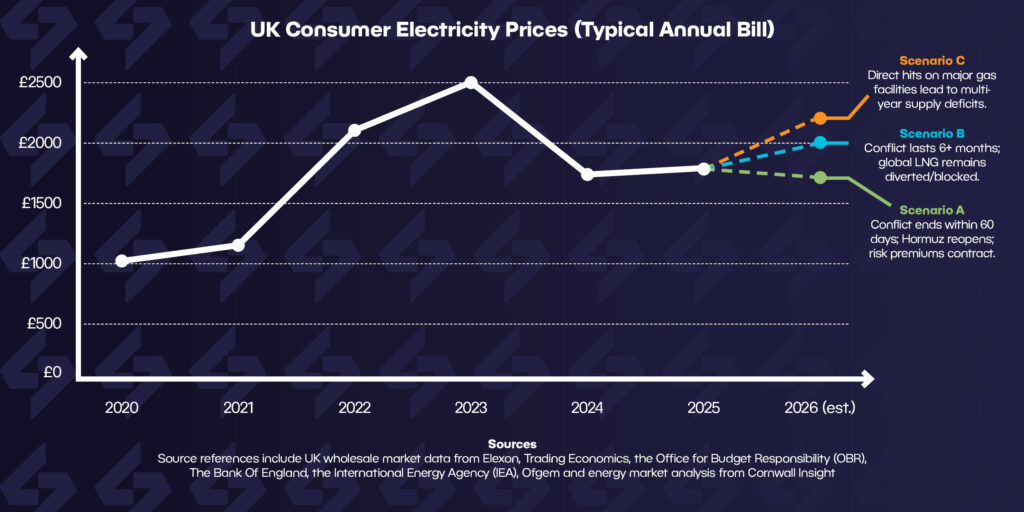
When Russia invaded Ukraine in 2022, the effects on energy markets were immediate.
Gas supplies tightened across Europe. Wholesale prices surged. Electricity costs followed.
The result was a sharp increase in energy costs for organisations across all sectors.
Businesses saw operational costs rise.
Schools and universities faced growing pressure on budgets.
Charities and public sector organisations were forced to absorb higher utility costs while continuing to deliver essential services.
The situation today is different. Energy markets are better prepared than they were in 2022.
But the underlying lesson remains the same.
Organisations that rely entirely on purchasing energy from the grid remain exposed to global price volatility.
The growing importance of energy resilience
Across the UK, organisations are increasingly exploring ways to reduce their exposure to volatile energy markets.
Energy resilience is becoming an important part of estate management and financial planning.
Rather than simply reacting to rising energy costs, many organisations are now looking at ways to:
- Generate some of their own electricity
- Store energy for later use
- Manage when energy is used
- Optimise how energy systems operate
This shift is helping organisations gain greater control over one of their most unpredictable operational costs.
Generating electricity on site
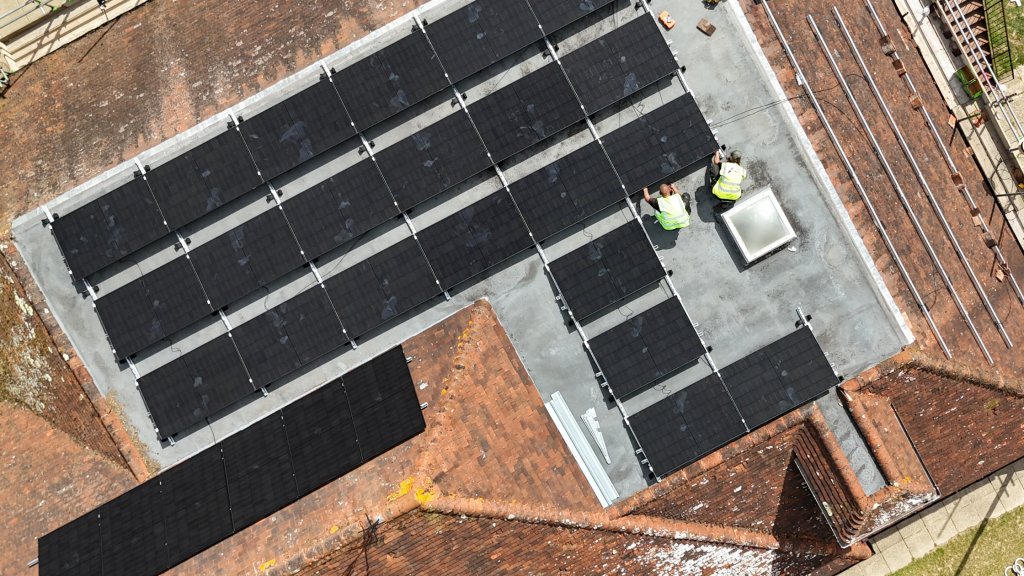
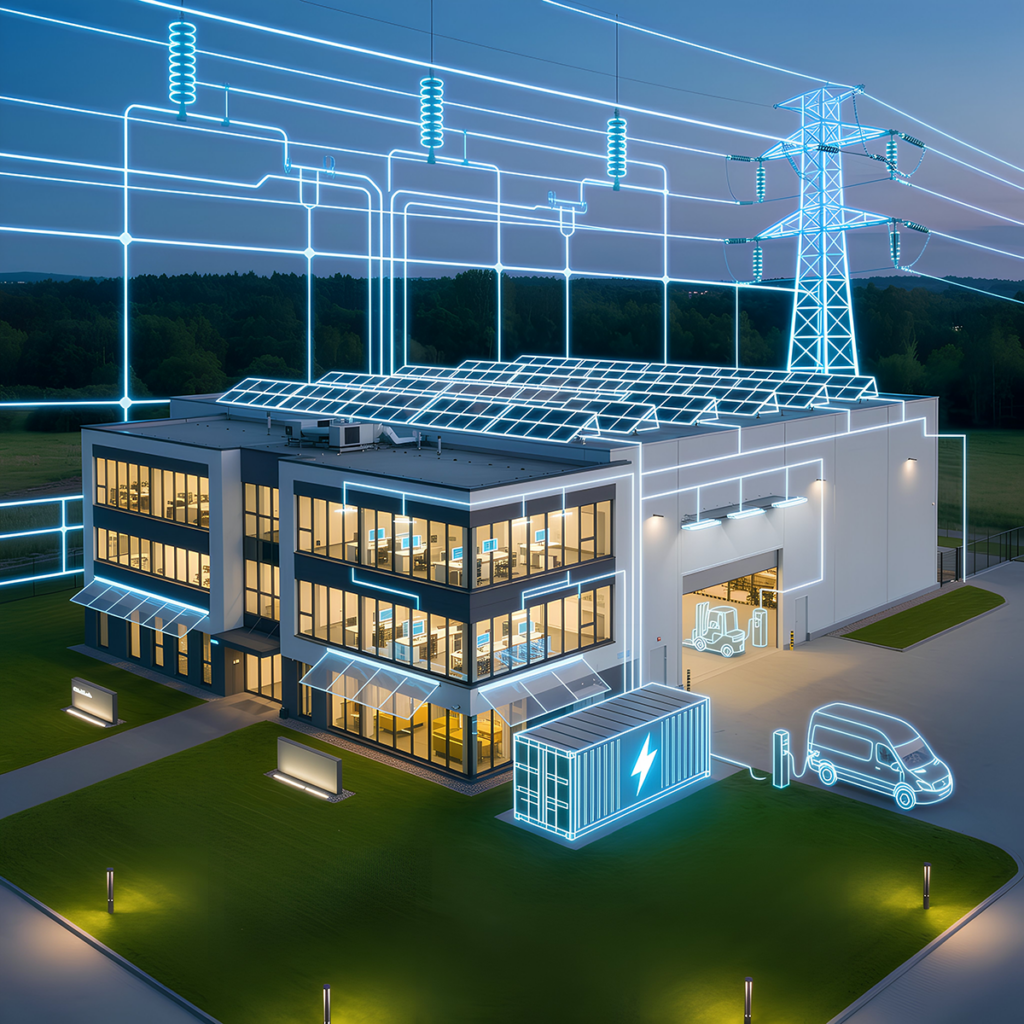
Installing solar PV systems allows organisations to generate electricity directly from daylight.
For many buildings, particularly schools, commercial premises and public sector estates, solar can supply a significant portion of daytime electricity demand.
This reduces the amount of electricity that needs to be purchased from the grid.
Discover HSEnergy’s Solar Solutions
Storing energy to manage demand
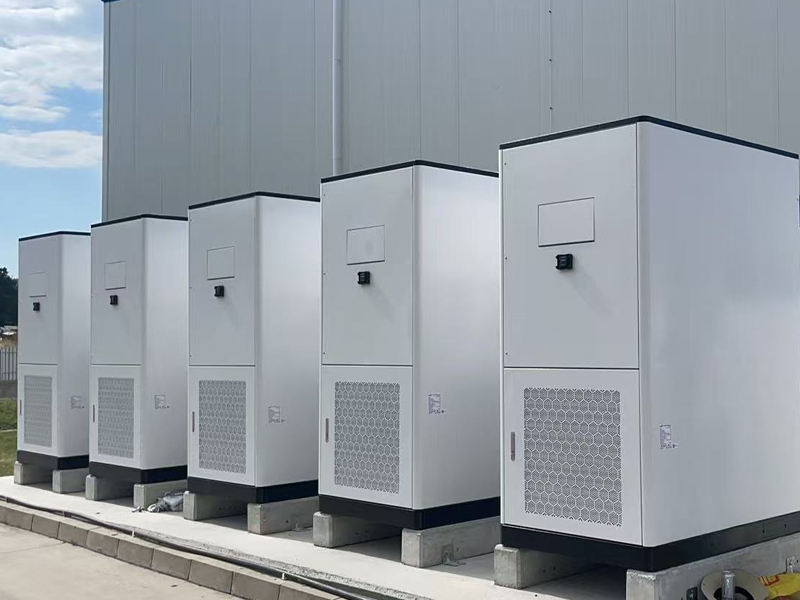
Battery energy storage systems allow organisations to store electricity for use later.
Energy generated during the day can be used during peak demand periods or when electricity prices are higher.
This can improve how energy is used across a site and help reduce exposure to peak electricity prices.
Discover HSEnergy’s Energy Storage Solutions

Turning energy infrastructure into an intelligent system
Solar panels and battery storage provide the physical infrastructure for a more resilient energy system.
But modern energy management platforms can take this a step further.
At HSEnergy, systems can be supported by Sentinel™, an intelligent monitoring and optimisation platform designed to manage energy systems more actively.
Sentinel continuously monitors how a system is performing while also learning how energy is used across a site.
It analyses usage patterns, forecasts weather conditions and monitors opportunities within the electricity grid.
Using this information, Sentinel can automatically optimise how and when energy is generated, stored and used.
For example, Sentinel may:
- Store solar generation for later periods of demand
- Charge batteries when electricity prices are lower
- Use stored energy when grid prices increase
- Identify opportunities to export energy back to the grid
- Ensure the system is operating as efficiently as possible
At the same time, Sentinel continuously monitors the performance and health of the energy system, helping identify potential issues early.
Instead of simply installing renewable technology and leaving it to run independently, Sentinel helps transform energy infrastructure into a smart, actively managed asset.
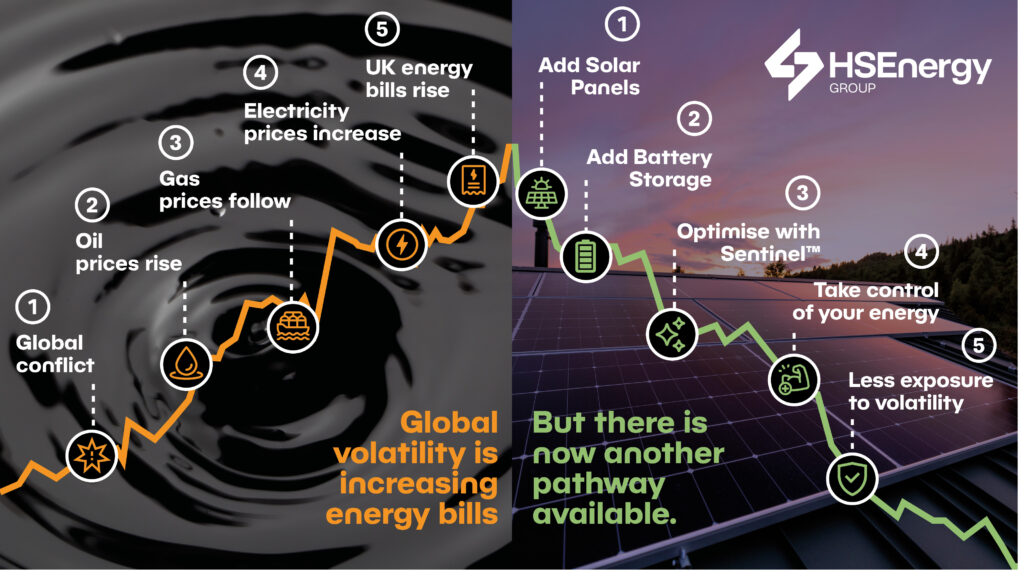
Global events will always influence energy markets.
But what is changing is how organisations respond.
Solar generation, battery storage and intelligent optimisation platforms allow organisations to reduce reliance on purchasing energy entirely from volatile global markets.
Instead of being fully exposed to energy price fluctuations, organisations can take steps to build greater energy resilience, predictability and operational control.
For businesses this can protect margins.
For schools and public sector organisations it can protect essential budgets.
For charities it can help ensure funding is directed toward services rather than rising utility costs.
At HSEnergy, our goal is not simply to install renewable energy systems.
It is to help organisations create smarter energy systems that work quietly in the background, helping manage energy costs and improve long-term resilience.
Because while no organisation can control global events, it is increasingly possible to control how much those events affect the cost of powering buildings and operations.
Frequently Asked Questions
Why do global conflicts affect energy prices in the UK?
Energy is traded in global markets. When conflicts occur in major energy producing regions, oil and gas prices can rise due to concerns about supply and demand.
In the UK, electricity prices are often influenced by gas generation. This means that when gas prices increase globally, electricity prices can also rise, even if the electricity itself is generated domestically.
As a result, geopolitical events can eventually affect energy costs for organisations across the UK.
Why are electricity prices in the UK linked to gas prices?
The UK electricity market operates on a pricing system where the final unit of electricity needed to meet demand sets the wholesale market price.
Because gas-fired power stations are often used to meet peak demand, gas generation frequently determines the final market price of electricity.
This means electricity prices can rise when gas prices increase, even when renewable generation is producing electricity at a lower cost.
How can organisations reduce exposure to energy price volatility?
Many organisations are exploring ways to reduce their reliance on purchasing electricity entirely from the grid.
This may include installing solar generation, using battery storage to manage energy use more effectively and implementing energy management platforms that optimise how energy systems operate.
These approaches can help organisations gain greater control over how and when energy is used.
Are solar panels viable for schools, public sector buildings and charities?
Yes. Many public and community buildings have large roof areas and consistent daytime electricity demand, which can make them particularly suitable for solar generation.
Solar systems can help supply a portion of a building’s electricity directly from daylight, reducing reliance on grid electricity during operating hours.
This can support long-term energy cost stability while contributing to sustainability objectives.
What role does battery storage play for organisations?
Battery energy storage allows electricity to be stored and used later when it is needed.
This can help organisations manage peak demand, make better use of solar generation and reduce reliance on electricity purchased at higher times of the day.
For some sites, battery systems can also support participation in energy flexibility markets.
What does Sentinel do for commercial and public sector energy systems?
Sentinel is an intelligent monitoring and optimisation platform that works alongside solar and battery systems.
It continuously monitors system performance while also learning how energy is used across a site.
By analysing usage patterns, forecasting weather conditions and identifying opportunities on the electricity grid, Sentinel can automatically optimise how energy is generated, stored and used.
This helps ensure energy systems are operating efficiently while maximising the value they deliver to the organisation.
Can energy systems generate revenue as well as savings?
In some cases, yes.
Battery systems can sometimes participate in grid services or flexibility markets where stored energy can be exported back to the grid at certain times.
When combined with intelligent optimisation platforms, this can create opportunities to generate additional value from installed energy infrastructure.
Is investing in energy infrastructure mainly about sustainability?
Sustainability is an important factor for many organisations, but energy infrastructure is increasingly viewed as a financial and operational decision as well.
Generating and managing energy on site can help improve cost predictability, reduce exposure to volatile energy markets and support long-term energy resilience.
For many organisations, the conversation has shifted from purely environmental benefits to strategic energy management.
Want to explore how your organisation could reduce energy risk?
Many organisations are now reviewing how exposed their buildings are to volatile energy markets.
Solar generation, battery storage and intelligent energy optimisation are helping estates teams gain greater control over energy costs.
At HSEnergy, we work with organisations across the commercial, education, charity and public sectors to design energy systems that improve efficiency and resilience.
If you would like to explore what this could look like for your organisation, speak with one of our energy specialists.